AI Consultants for Small Business: The Fractional Team Playbook
AI consultants for small business explained: how the fractional retainer model installs revenue and ops AI infrastructure that actually pays back EBITDA.
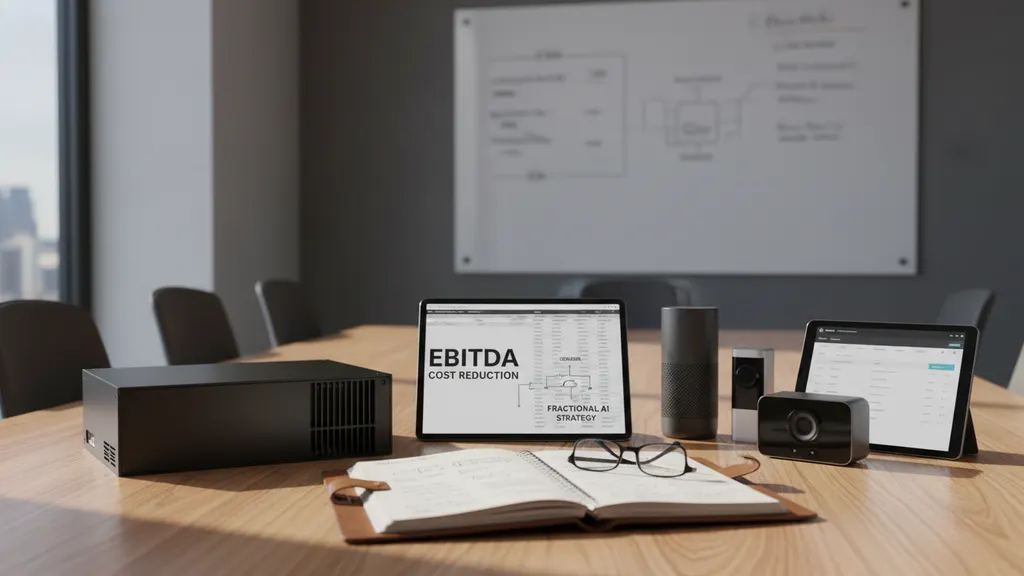
What does a small business owner ask first when she calls about AI? Usually it is some version of: "I keep hearing about ChatGPT and agents, but I have nine employees, three vendors, and a QuickBooks file. Where do I even start?" That question is why ai consultants for small business exist as a distinct category. The work is not picking a tool. It is mapping the revenue and operations stack, then deciding what AI infrastructure actually moves EBITDA.
Why AI Consultants for Small Business Are Different From Enterprise Vendors
The category of ai consultants for small business exists because the enterprise consulting model breaks below $50 million in revenue. A Big Four engagement assumes a CTO, a data team, and a six-figure software budget. None of that exists at a 30-person firm. The shape of the work has to change.
The mid-market and SMB segments hold roughly 33.2 million firms in the United States, according to SBA Office of Advocacy figures. Most of them run on QuickBooks, a CRM, three SaaS tools, and email. They cannot absorb a 14-month transformation program. They need a partner who installs working systems in 90-day cycles, governs them, and hands them off without breaking the business when month thirteen arrives.
That fractional posture is the structural difference. A 2023 Harvard Business Review piece on the economics of generative AI made the point bluntly: the firms that capture the upside are the ones who treat AI as an installed asset, not a procurement event. A consultant who shows up with a slide deck and a product recommendation is selling a procurement event. A consultant who shows up with a process map and a governance scaffold is installing infrastructure.
The Fractional Model: How AI Consultants for Small Business Actually Work
Fractional ai consultants for small business operate on a retainer that ranges from roughly $4,000 to $18,000 per month, depending on the scope of the systems being installed. The relationship lasts six to twenty-four months because AI infrastructure has to be tuned, governed, and adapted as the business changes.
The model has four moving parts: a process audit, a stack assessment, a governance framework, and an installation cadence. McKinsey's 2023 State of AI survey reported that organizations that combine those four elements see a median 18% drop in operational overhead within nine months, with the highest-performing quartile reaching 31%. The numbers come not from picking better models but from picking the right workflow to automate first and the right humans to govern it.

The retainer covers four things in practice. First, a weekly working session with the founder or operations lead. Second, two to four implementation hours from a junior engineer who builds the pipes. Third, governance documentation that satisfies whatever regulator or auditor the client answers to. Fourth, change management with the team that will run the system every day. The fourth item is the one that distinguishes a working installation from a shelf-ware purchase.
For a closer look at this, see AI Consultants for Small Business: What a Fractional Team Delivers.
What to Expect in Month One With AI Consultants for Small Business
In the first thirty days, competent ai consultants for small business do almost no automation work. The week-one deliverable is a process map. Week two is a data audit. Week three is a governance scaffold. Only in week four does code or prompt engineering begin, and even then it targets one workflow.
That sequencing is deliberate. NIST's AI Risk Management Framework identifies governance as the precondition for trustworthy deployment, not a documentation exercise to bolt on later. A small business that automates lead intake before defining who owns the audit trail is one regulatory letter away from rolling everything back. The first month buys the right to install anything at all.
| Week | Deliverable | Owner |
|---|---|---|
| 1 | Process map of revenue and ops workflows | Consultant + operations lead |
| 2 | Data audit and integration inventory | Consultant + finance lead |
| 3 | Governance scaffold and acceptable-use policy | Consultant + founder |
| 4 | First workflow installation in production | Junior engineer + system owner |
Founders should expect uncomfortable questions in week one. Who approves a refund right now? Where does the customer record actually live? What happens when the bookkeeper goes on vacation? The point of the audit is not to embarrass anyone. It is to expose the spots where the business has been held together by a single person's memory, because those are the spots where AI infrastructure will either pay back fast or break loudly. See our earlier piece on why AI infrastructure outperforms shelf-ware procurement at SMB scale for the full breakdown.
The Five Workflows That Justify the Spend
Most engagements that ai consultants for small business take on end up touching the same five workflows. Quote-to-cash, lead routing, invoice triage, customer support classification, and inbound document extraction. The 2024 Deloitte State of AI in Enterprise survey found those five accounted for 72% of measurable ROI in firms below 500 employees.
Quote-to-cash is usually first. A small commercial real estate firm processes 40 to 80 proposals a month, each one assembled by hand from a CRM, a property database, and a margin calculator. Installing a quote agent that drafts the proposal and routes it for human approval cuts the time per quote from 2.5 hours to 18 minutes in the cases we have shipped. The quote still ships under a human name, but the human approves rather than assembles.
Lead routing is second. The work is not building a chatbot. It is classifying inbound inquiries, scoring them against the ideal customer profile, and assigning them to the right human within four minutes. A 2023 Gartner analysis of the AI hype cycle noted that routing speed correlates more strongly with close rate than any other front-of-funnel metric. The infrastructure to do this well costs less than $300 a month in API spend at SMB volumes.
Pricing, Contracts, and Red Flags
The pricing market for ai consultants for small business is messy. Three patterns recur. Pattern one: a hybrid retainer with an installation fee, a monthly governance fee, and a usage-based API pass-through. Pattern two: a flat monthly retainer with usage capped. Pattern three: project-based billing for the first 90 days followed by a retainer.
The hybrid model is the cleanest. It separates the installation cost (which is one-time labor) from the ongoing cost (which is governance, not labor) and from the variable cost (which is API spend that grows with usage). Any consultant who quotes a single monthly number without breaking out those three components is hiding margin somewhere.
Three red flags worth naming. First, anyone who promises ROI in 30 days. The first 30 days are governance and audit. ROI begins in month three at the earliest. Second, anyone who refuses to put the model and prompt logic in your repository. If the IP lives in their account, the lock-in is the product. Third, anyone who cannot name a workflow they walked away from. The discipline to refuse a workflow that will not pay back is what separates a consultant from a vendor. For more on this pattern, see our comparison of fractional versus full-time AI hires.
Building the Internal Counterpart
The best engagements end with the client having someone internally who can run the system without the consultant. That person is usually not technical. They are usually the operations manager or the controller. Their job is to read the audit log, approve exceptions, and own the change-control process when a new workflow gets added.
This is the part most engagements get wrong. The consultant ships a working system, the founder is happy, and six months later nobody on the internal team can answer a question about why the agent declined a refund. The system stops being trusted, and the trust collapse looks like a model problem when it is actually a documentation problem. BCG's 2024 review of AI scaling outcomes found that 70% of stalled deployments traced back to absent internal ownership rather than model performance.
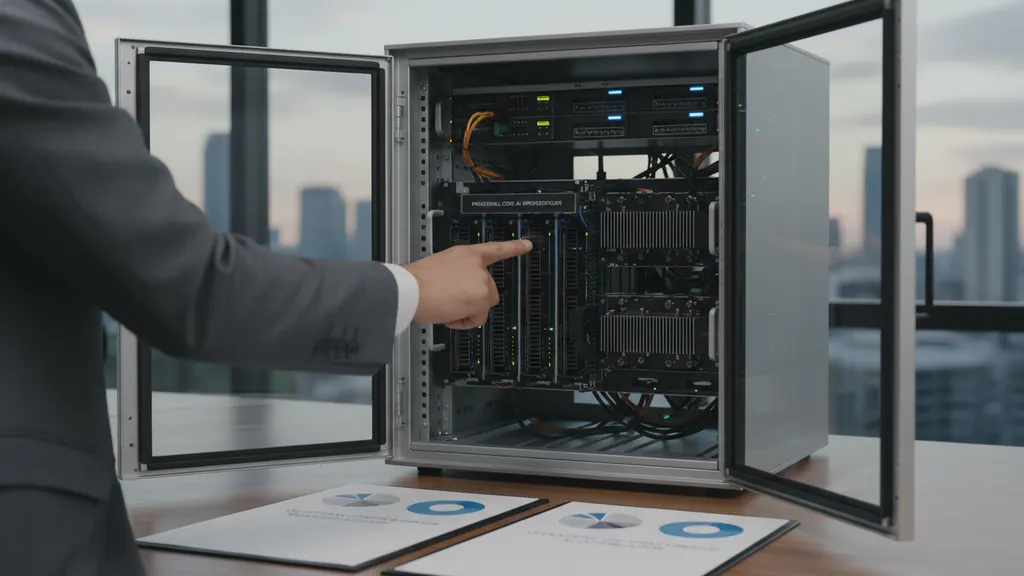
The training cycle for the internal counterpart is roughly six weeks. Two weeks of shadowing the consultant during weekly working sessions. Two weeks of co-piloting the change-control process. Two weeks of running it solo with the consultant available on Slack. By week seven the consultant should be advising on new workflows, not maintaining the existing ones. Read more in our governance scaffold guide for small business AI deployments.
Frequently asked questions
How much do ai consultants for small business actually cost?
Retainers run between $4,000 and $18,000 per month for fractional engagements, with the top of the range covering installation labor plus governance for businesses with $15 million to $50 million in revenue. The 2024 Deloitte AI Index reported a median first-year all-in cost of $96,000 for SMB engagements that delivered measurable ROI, with API spend adding roughly 8% on top. Sub-$4,000 quotes typically mean no governance and no audit trail, which means you are buying a tool wrapper, not infrastructure. The ROI multiples in the data come from the engagements that actually install the four-part scaffold.
What is the difference between an AI consultant and an AI agency?
An AI agency typically charges for projects: a chatbot build, a workflow automation, a content pipeline. The deliverable is software. A consultant is paid for judgment: which workflow to install first, who should own it, how to govern it, when to walk away. The Harvard Business Review analysis from July 2023 framed the difference as buying outputs versus buying installed capability. Most small businesses need both at different points, but the consulting layer has to come first. Hiring an agency without consulting work first is how a 30-person firm ends up with six disconnected automations and no audit trail.
Can a small business afford AI without a consultant?
Yes, for narrow use cases. A solo operator using ChatGPT for first-draft proposals does not need a consultant. The threshold where consulting starts paying back is roughly $2 million in revenue or 12 employees, whichever comes first, because below that the operational complexity is low enough that off-the-shelf SaaS solves most problems. SBA Office of Advocacy small-business profiles show that firms in the $2-50 million bracket carry the operational complexity that justifies the installation cost. Below the threshold, the tool fits the business. Above it, the business outgrows the tool, and that is where the consulting work begins.
How long does an engagement with ai consultants for small business last?
The shortest useful engagement is 90 days, which buys a process map, a governance scaffold, and one installed workflow. Most engagements run 12 to 18 months because that is the time required to install three to five workflows, build the internal counterpart, and document the system for handoff. Gartner's 2023 hype cycle analysis noted that engagements shorter than 90 days correlate with a 60% abandonment rate by month nine, because nothing was governed enough to survive the consultant leaving. The right length is whatever it takes to make the internal counterpart confident running the system alone.